


We Provide Pest Control & Wildlife Removal Services in Brantford, Kitchener-Waterloo, London, Cambridge and Guelph Ontario - Guaranteed Wildlife Removal For Up To 5 Years...
The #1 Wildlife Removal, Pest Control and Pest Eviction Specialists in Southern Ontario
We Keep Wildlife & Pests Out Permanently!
Posted by Jared Houliston Thursday, June 18th, 2026 | 1,644 Reads
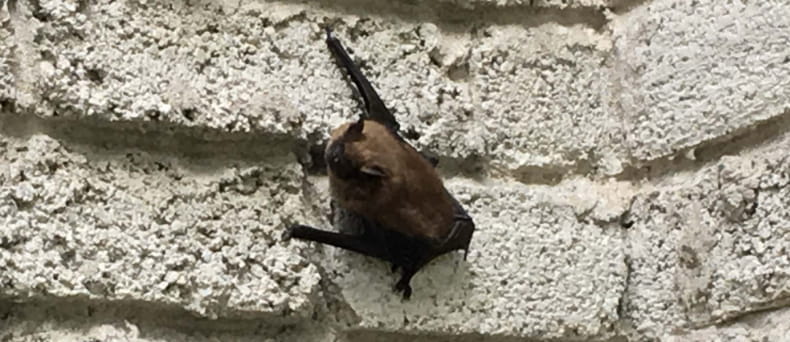
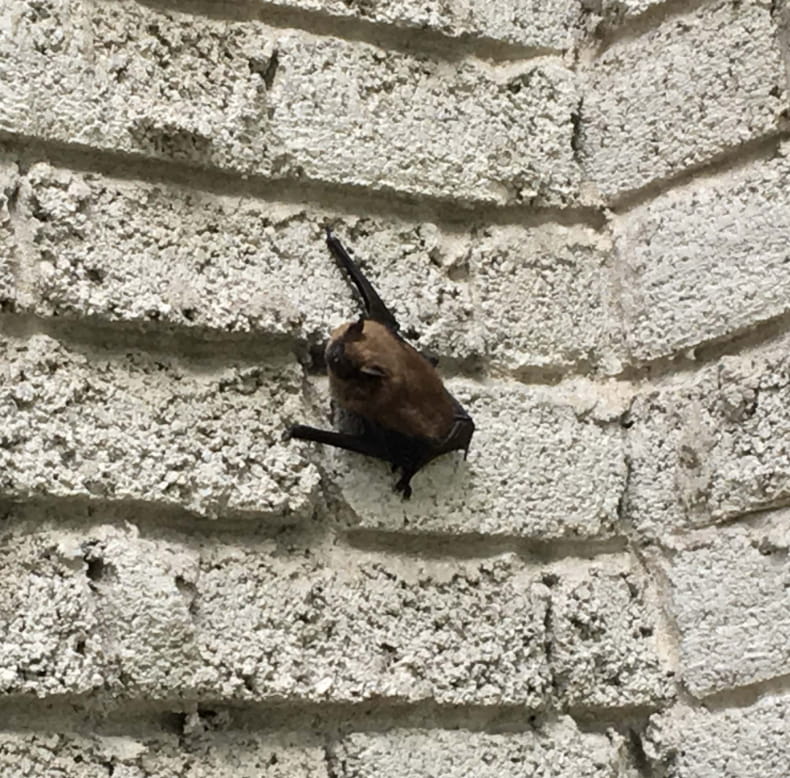 Every year we get calls from homeowners who have bats in their attic or the main areas of their homes, and are not sure what to do about it.
Having a bat in your home or attic is stressful enough without the added risk of getting bit, breaking the law, or having a colony roosting in the attic.
If there is a bat anywhere in your home, the safest things you can do is call a wildlife removal specialist for bat removal services.
This applies to a single bat in the living space and for a full colony of bats living in the attic.
TLDR: The work, risks and the laws are not the same in both situations but the bottom line is – that a DIY removal is a bad idea in either case. Bats are also protected in Canada and under most circumstances it is against the law to kill them or remove them from an attic at certain times of the year.
If you have bats in your home or attic, the reasons to call a professional come down to these few points:
In the video below you’ll see a clear example of why a professional removal is usually required:
When a bat is flying around your house, you’ll definitely want it to get out immediately. That reaction is normal, but grabbing a broom, a blanket or a tennis racket is not the right way to handle it. Handling the bat yourself runs the dangerous risk of getting bit by it or accidentally injuring it.
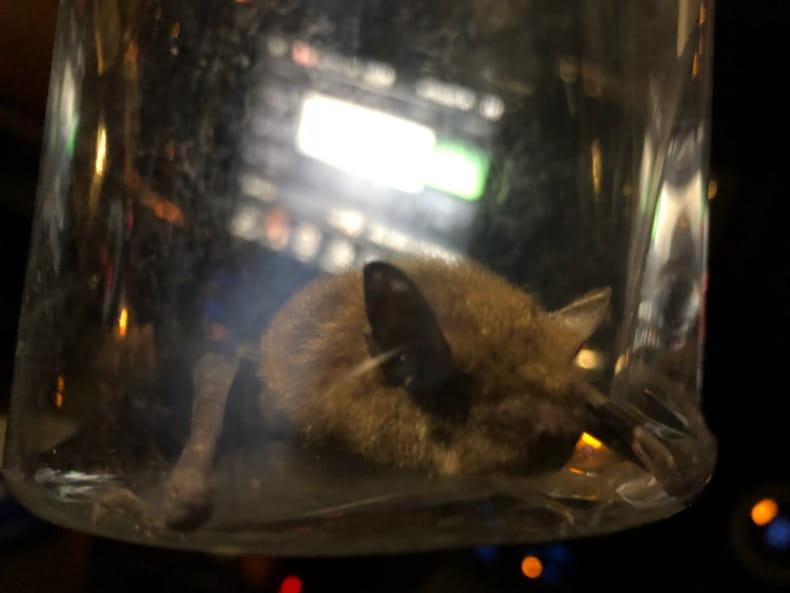 Warning: Bats can carry rabies, and bat bites are not always easy to see. A bite can look like a tiny scratch on your hand, wrist, neck or any other exposed skin. If you or someone in your household was near the bat, you must check for new marks before you do anything else after handling it.
If anyone may have been bitten, wash the area with soap and water for 15 minutes and go to the hospital right away because once rabies symptoms start showing up, the outcome is almost always fatal.
This risk alone is reason enough to leave the removal of the bat to someone trained to handle bats safely. A wildlife removal specialist knows how to capture the bat humanely and release it outside or, during winter months, they’ll contact a wildlife rehabilitation centre.
A bat flying through your living space did not necessarily come in through an open door or window. In much of the cases it came down from the attic through a wall void, a vent or a gap around a light fixture. That is why we always recommend an attic inspection after a bat is removed from the main floor.
If you are not sure whether bats are in your attic, read through the top signs you have bats in your attic and learn how to look for guano (bat droppings), oily streaks around external edges and entry points, or bats flying to and from the roof areas at sundown.
If a bat is in the common area of your home right now:
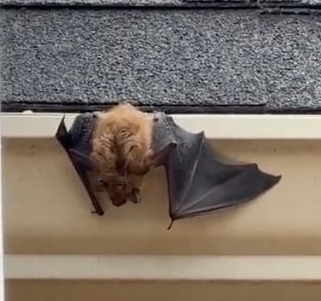 When a colony of bats are in your attic, the removal is a completely different job compared to when a single bat is in the common area. You’re not just dealing with one animal but instead, you’re evicting a roost, sealing entry points and in most cases cleaning up the contamination left behind by guano and urine.
A lot of homeowners believe they can handle the bat removal and attic restoration on their own, but we advise against this and here is why.
In Ontario it is illegal to kill bats under the Fish and Wildlife Conservation Act, 1997. Eight species are listed as Specially Protected Mammals, including the Little Brown Bat that shows up in attics more than any other bat species does. Several of those species are also endangered.
That means you cannot poison them or trap them inside the attic and hope for the best. Trapping bats inside a structure is considered cruel and inhumane. Doing so also creates a serious odour problem and can put you on the wrong side of the law.
Bats also have a maternity season (usually from mid-June through early August) where removing or excluding them during that timeframe is illegal. It puts flightless babies at risk of starving in the attic and disrupts their mating behaviour.
Sealing the attic before the bats are out is one of the worst mistakes a homeowner can make. You end up with trapped bats that die in the walls, an odour that does not easily go away, and a cleanup bill that could cost far more than hiring a professional removal expert in the first place.
Our page on whether it is legal to kill bats in Ontario breaks down the bat species, the legal Acts involved and the times of year when removal is allowed.
A proper and effective bat eviction involves a wildlife removal specialist inspecting the entire roofline, soffits, fascia, vents, chimneys and gaps around the home to find every entry point. Because bats can squeeze through extremely small gaps, missing even one hole means they can potentially get back in again.
Our standard approach is to install one-way doors at the main roost exits so the bats can leave on their own but cannot re-enter, and sealing up the potential entry points we found during the inspection.
Once the colony has cleared out, those doors are removed and the entry points get properly sealed with materials bats cannot get through. If you want to understand where they got in to begin with, read our article on how bats are getting into your house which covers common entry points around Ontario homes.
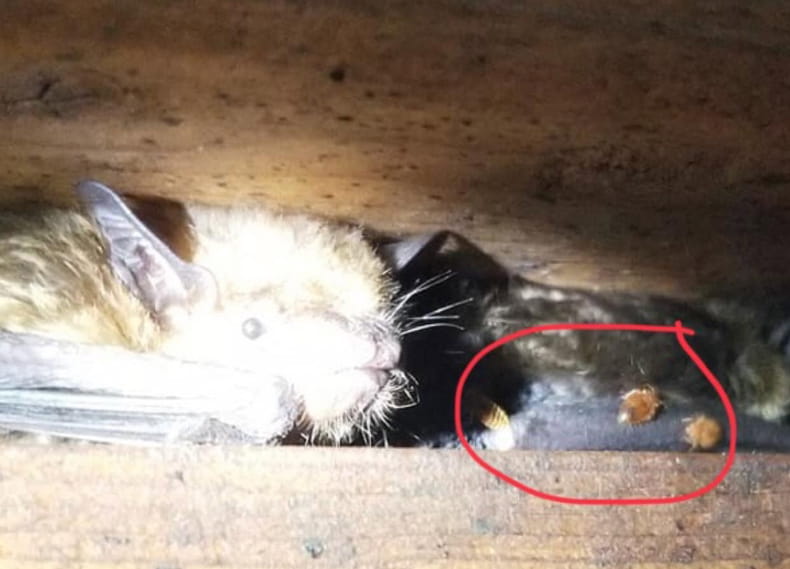 Even after the bats are gone, the job is still not finished because a bat colony will leave behind piles of guano, urine stains, strong ammonia odours and in some cases bat bugs or fungal spores in the insulation.
Breathing in that material and having particles flow through your air vents can be a real danger to you and your family too.
Attic restoration after wildlife damage involves removing contaminated insulation, disinfecting the structure, deodorizing the space, and installing new insulation to bring the R-value back up to code.
Our article on why attic restoration is needed after wildlife removal explains what that process looks like and why skipping it is not in the best interest of the home.
Attic restoration is not work you want to do with a shop vac and a dust mask. A professional crew should do the cleanup using industrial vacuums, sealed disposal bags and commercial-grade disinfectants to contain the contamination instead of letting it spread throughout the rest of the house.
It is that time of year again so if you are hearing fluttering sounds at night, smell faint scents of ammonia or see bat activity around the outside or inside of your home, do not wait until the problem gets worse. Call a humane wildlife removal company as soon as possible and book an inspection.
The sooner a colony is removed, the less damage you’ll have to deal with, and the lower the restoration costs – if any – will be.
Ontario Wildlife Removal Inc. provides wildlife removal and pest control in Southwestern Ontario, including Brantford, Kitchener-Waterloo, Cambridge, Guelph, London, Woodstock, Tillsonburg, Simcoe, Port Dover, Paris, St. George, Six Nations, Caledonia, Burlington, Waterdown, Oakville, Hamilton, Stoney Creek, Grimsby, & Niagara Region. Our methods are safe, humane and environmentally friendly. Call today to book your inspection.
Every year we get calls from homeowners who have bats in their attic or the main areas of their homes, and are not [...]
After a wild animal has been removed from an attic, homeowners usually breathe a sigh of relief and can sleep better at night. [...]
If you’re living in or near an Ontario suburb, and you’re seeing more rat or mouse activity around your home, you’re not imagining [...]

Leave a Reply